 AtonuRoyCh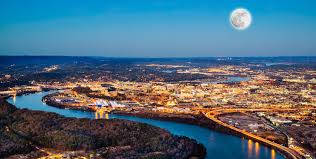
With the Tennessee River, Appalachian Highlands, and forested Cumberland Plateau as the backdrop to Chattanooga, Tennessee, its nickname, “Scenic City,” is well deserved. But 50 years ago, Chattanooga was considered to have the worst air quality in the United States. Through ambitious planning, community investment, and progressive environmental action, Chattanooga transformed from an industrial cautionary tale into North America’s first National Park City, equipped with a revitalized riverfront, a prominent art and culinary scene, and a reputation as an unrivaled outdoor destination.
(Here's what you should know before planning a trip to Tennessee.)
Chattanooga’s transformation is globally recognized
In the mid-20th century, Chattanooga was a dymamic industrial hub, bustling with iron and steel manufacturers, textile mills, and converging rail lines such as the Southern Railway and the Louisville & Nashville Railroad. But that prosperity came at a cost. Unregulated emissions suffocated the city’s air, and by 1963, Chattanooga's mortality rate from tuberculosis was three times the national average, according to the Chattanooga-Hamilton County Air Pollution Control Bureau. In 1969, the U.S. Department of Health, Education, and Welfare named Chattanooga the nation’s “worst city for particulate air pollution,” and award-winning American journalist Walter Cronkite allegedly called it the “Dirtiest City in America.”
The unflattering national attention prompted a turning point. Chattanooga’s leaders, like Jack Lupton, chair of the Lyndhurst Foundation, and Mayor Gene Roberts who oversaw the launch of the waterfront development, prioritized environmental improvement in the city’s economic future, setting the stage for one of the country’s most remarkable urban revitalization stories.
Chattanooga’s evolution landed the city a new title in April 2025—the continent's first “National Park City”—a global recognition given to only four cities to date.
Becoming a National Park City
A National Park City has no affiliation with the official National Park Service. The National Park City Foundation (NPCF), in conjunction with World Urban Parks and Salzburg Global Seminar, is the accrediting body. According to the NPCF website, “National Park Cities are a way to rethink cities, their futures, and how we inhabit them.”
For Chattanooga, that meant years of planning and conservation work across the city, and the support of 5,600 resident endorsements. Brian Smith, communications and marketing director for the City of Chattanooga Parks & Outdoors, says the city had to meet a range of criteria, from gathering signatures and demonstrating citizen support to showing the long-term plans already underway. “You need to have a city that’s seeing massive changes,” he says. “You need to have a city that has local citizen support, nonprofit support, and also show that the city itself is making efforts toward a better, greener, wilder city.”
In order for a city to become a National Park City, it needs to complete 10 critical steps outlined in their Journey Book and meet other specific criteria outlined by the foundation including, “meaningful policies to protect and enhance nature, culture, heritage, the environment and public space,” plus a “deep understanding of the biological, cultural and social landscapes that makes the city unique.”
Best time to visit Chattanooga
Spring: Admire the city’s iconic flora and fauna from scenic overlooks like Edward’s Point with sweeping views of the river valley and nearby mountains, or Snooper’s Rock for some of the best vantage points of the Tennessee River Gorge. Reap the rewards of the heavy seasonal rain by visiting Greeter Falls at Savage Gulf State Park or the 256-foot high Fall Creek Falls. Walk among the spring blooms at Audubon Acres Nature Sanctuary or the Little Cedar Mountain Wildflower Walk at Nickajack Reservoir. Plan a trip to the city in time to catch springtime events like the Spring Tulip Celebration and the 4 Bridges Art Festival.
Summer: Late April through September, Chattanooga overflows with outdoor adventure and riverfront festivities. On the North Shore, Stringer’s Ridge has nature trails only two miles from downtown. Launch a kayak on the Tennessee River or rent a paddleboard from L2 Outside in Coolidge Park. Twenty miles from the city, the Ocoee River offers world-class whitewater rafting. Explore Chattanooga's City Center, head to The Chattanooga Market, and, beginning weekends in May, enjoy free live music at Nightfall or Riverfront Nights concert series.
Fall: Mid-October through early November, fall colors begin to saturate higher elevations, then move down into the valleys a week or two later. Check the Fall Foliage Prediction Map for the best leaf-peeping opportunities. Meander through pumpkin patches or attend Chattanooga Zoo’s Boo in the Zoo and other family-friendly events around the city. Don’t miss the IBMA World of Bluegrass in October, honoring the tradition of bluegrass music and its community.
Winter: Millions of lights twinkle across Chattanooga at Rock City’s Enchanted Garden of Lights and the Chattanooga Zoo’s Asian Lantern Festival. Climb aboard the Tennessee Railroad Museum’s Holiday Christmas Lights Train or attend Reindeer on the Riverfront & Lighted Boat Parade, a 40+-year tradition with decked-out boats floating down the Tennessee River and live music, pictures with Santa, and real reindeer on shore. Enjoy a spirited show performed by the renowned Chattanooga Symphony and Opera or catch a performance at the Chattanooga Ballet.


rakibhossendev
April 18, 2026Wow. Great blog